Pause carousel
Play carousel

Abertay University research has helped shape new national training for ophthalmologists, designed to improve support for people with sight loss.
Mhairi Thurston, Professor of Applied Counselling and Psychotherapy Research in Sight Loss, played a key role in developing the training, which is designed to improve how people receive a diagnosis of sight loss.
Developed by the Royal National Institute of Blind People (RNIB) in collaboration with the Royal College of Ophthalmologists and Professor Tariq Aslam, lead ophthalmologist on the project, the training was formally launched at a reception in Westminster on last month, hosted by the RNIB and Marsha de Cordova MP.
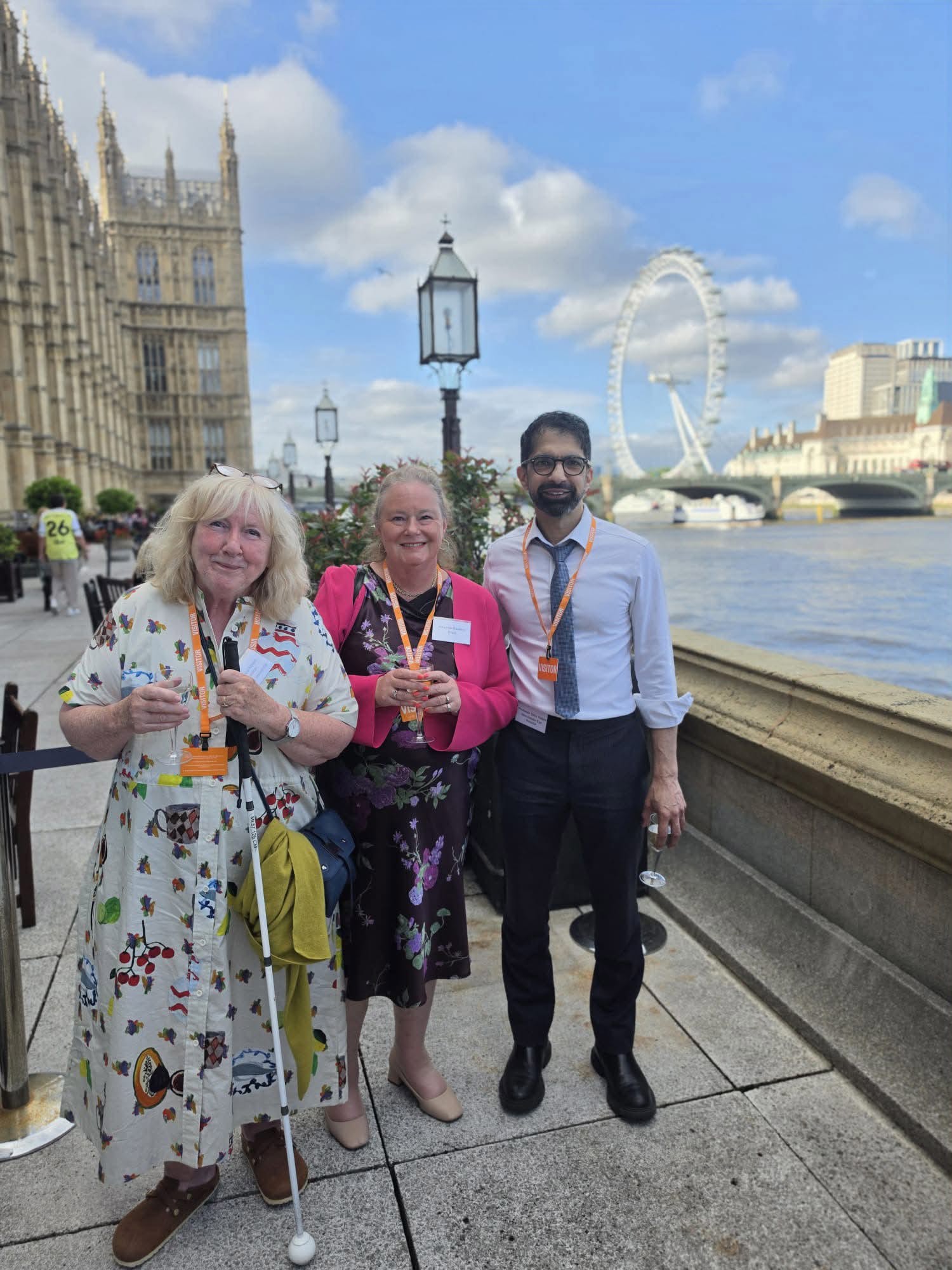
The new training aims to help ophthalmologists have sensitive conversations with patients at the point of diagnosis, and to better understand the emotional impact of sight loss and routes to support.
Professor Thurston's involvement builds directly on her research into the mental health impacts of sight loss. Her work has consistently demonstrated that the way difficult news is communicated to patients can have a profound and lasting impact on how people adjust to sight loss and engage with support services.
Professor Thurston said:
For many people, receiving a diagnosis of a sight-threatening condition is a life-changing moment. Research has shown that compassionate communication and emotional support at this stage can make a significant difference to long-term wellbeing. It is incredibly rewarding to see this evidence translated into practical training that has the potential to improve experiences for patients across the UK.
The training modules and accompanying good practice guidance have been designed to fit around busy clinical schedules and are now available to all members of the Royal College of Ophthalmologists through the Inspire learning platform.
The initiative represents an important example of research informing policy and professional practice, ensuring that evidence about the emotional impact of sight loss is translated into meaningful improvements in patient care.
Professor Mhairi Thurston’s research is informed by her own experience of living with sight loss. Following a diagnosis of retinitis pigmentosa at the age of 39, she developed a programme of research examining the emotional and psychological impact of visual impairment.
Her work has helped increase understanding of the support needs of people with sight loss and has informed the development of counselling models, professional training and wellbeing resources used across the sector.


